

Let’s start with a bang: more than half of the japanese “variants” listed on this website aren’t actually variants at all.
In Japan, they’re simply called ブックカバ (book covers) and that’s exactly what they are: protective covers with different designs, placed over books or manga, often made of paper, but sometimes fabric, plastic, or even leather. This feature is dedicated exclusively to the paper covers distributed by Japanese bookstores… a mysterious and intriguing phenomenon worth exploring.
While Western collectors have grown fond of calling them “variants”, book covers are an entirely different phenomenon. They’re something distinctly Japanese, a centuries-old tradition that stands as a testament to the nation’s deep relationship with print media and its unique bookstore culture. In other words, they’re a cultural artifact, a practical tool, and a canvas for creative design, all in one.
Why Do Japanese People Use Book Covers?
There are two main reasons. One is practical: to protect the book from dirt, wear, and sun exposure. The other is deeply cultural: to maintain privacy. Many Japanese people feel embarrassed if others can see what they’re reading. Whether it’s a business manual or a lewd hentai, readers often prefer to keep it to themselves.
Getting one of them is super easy: just walk into one of the thousands of bookstores in Japan and buy a book. Most of the time, they’ll throw in a book cover as a gift.
For manga, it’s pretty much the same, with the only difference being that they’re less common and usually only available during special campaigns.
Regardless of the type of book cover, they’re often distributed unfolded, since they’re made from standard sheets of paper designed to fit various book sizes. It’s up to the user to fold the book cover so it lines up properly with the measures of their book. Both manga and regular books can vary significantly in size, that’s why it’s common to find book covers with small markings along the edges: these act as guides, showing exactly where to fold the cover depending on the book’s format.
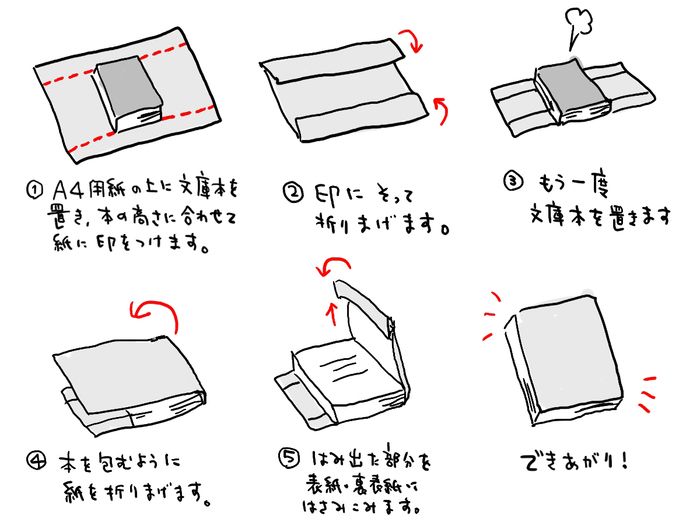
The delicate art of folding Japanese book covers — a task that delights and torments collectors in equal measure
A Tradition Dating Back Over 100 Years
This practice isn’t new. It dates back to the Taisho era (1912–1926), when bookstores started wrapping books in paper printed with their store’s name or logo. Initially, it served two purposes: advertising the shop and showing that the book had been paid for. Over time, it became customary, and today it’s an ingrained part of Japanese book culture.
What’s funny is that In the western part of the world, “book cover” usually refers to the actual cover of the book itself. The removable layer that goes over it is called a “dust jacket” or “book jacket.” But there’s no English term for the cover that goes over that… In other words, the kind of “book cover” you receive at a Japanese bookstore doesn’t even exist in Europe, America or many other countries in the world.
Unique Covers, Unique Stories
With more than 10.000 bookstores across the country, the variety of book covers is staggering. Some shops use covers distributed by publishers or wholesalers, but many create their own original designs.
The designs are usually printed in just one or two colors to save on ink, yet they manage to be instantly recognizable.



Some iconic covers from large bookstores chains (left to right: Kinokuniya, Sanseido, Junkudo)
Book covers vary in style depending on the store’s personality. Large chains often stick to a standardized brand look, while smaller shops express individuality and local pride through their artwork.
Small bookstores tend to have the most distinctive covers. Some feature cute illustrations, others include elaborate patterns or regional motifs that reflect the neighborhood where the store is located. Others collaborate with artists or host events where exclusive designs are given out when the store celebrates a special occasion.
While originally intended for novels and standard books, these covers have increasingly become part of manga culture too. Publishers and stores have started designing protective covers inspired by specific manga titles, sometimes in collaboration with the authors themselves. And that’s where things start to blur: they’re not “variant covers” in the Western sense, but rather bonus jackets, a second skin for the manga itself.
Some of these covers are incredibly rare, given out only once or in limited numbers. Their fleeting nature makes them nearly impossible to track, and that’s exactly what makes them so fascinating.

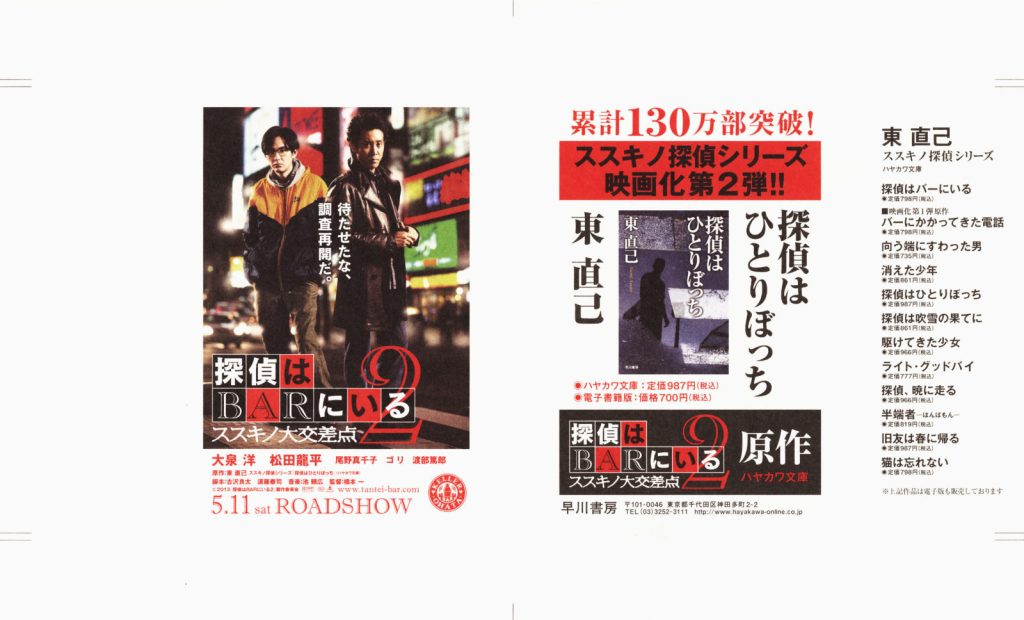


From ultra-minimal designs to vibrant explosions of color. From food-themed covers to ads for upcoming movies. Local sports team sponsorships and collaborations with mangaka. In a word, the variety of Japanese book covers is simply incredible
For the love of the hunt
Despite their rich history and cultural significance, these manga-related book covers have never been officially catalogued. Their existence and variety have come to light almost entirely thanks to the dedication of passionate collectors and enthusiasts who’ve shared their finds across forums, blogs, and social spaces over the years. A special mention goes to the Shohi Friendship Association, which has spent over four decades tirelessly documenting Japanese book covers and preserving their memory. If you want to know more, these are among the best books available on the market (note that they’re in Japanese, so be cautious).
- 日本のブックカバー (グラフィック社) | Japanese Book Covers (Graphic-sha)
- カバー、おかけしますか? 本屋さんのブックカバー集 (出版ニュース社) | Would you like a cover? Bookstores book cover collection (Shuppan News Co.)
- カバー、おかけしますか? 本屋さんのブックカバー集 2(出版ニュース社) | Would you like a cover? Bookstores book cover collection 2 (Shuppan News Co.)
The value of these covers can vary wildly. Some, like the legendary Sanoku Thanx series from One Piece, are deeply coveted. Others may only intrigue a few niche collectors, archeologists, or design historians. But in many cases – especially for older ones – their rarity has reached almost mythical levels.
And yet, perhaps the most magical part of all this is that even today, in 2025, new covers are still being discovered. Hidden in forgotten drawers, secondhand stores, or quietly handed out by small-town bookshops, they resurface like fragments of a secret history, waiting to be found again. In a world so thoroughly archived, that sense of wonder is a rare and beautiful thing.

Would you be able to track down this impossible-to-find cover? Good luck
TO BE VARIANT, OR NOT TO BE
At the beginning of this article, I mentioned that book covers aren’t exactly variants. But then, what actually counts as an official variant in Japan, and what doesn’t? And more importantly: does this distinction even make sense?
The big difference compared to the rest of the world comes down to two points:
- The sheer amount of manga-related material produced in Japan, far greater than anywhere else (which inevitably raises questions of commercial rights).
- The importance still placed on local distributors.
In Japan – the home of all the major manga publishers – the issue of commercial rights is almost nonexistent. By contrast, in France, Italy, Vietnam, and pretty much everywhere else, this is a significant challenge. Why? Because whenever a local publisher wants to release a cover variant, they first need approval from the Japanese parent company, which reviews and authorizes the artwork used on the cover. That’s why you often see the same artwork popping up on different variants across multiple countries: the selection is tightly controlled, and the pool of approved illustrations is often limited. Some publishers are notoriously strict (think of the mega-hits from Shonen Jump), while others are more relaxed and cost-effective.
In Japan, however, things work very differently. It’s a bit like what happens in the U.S. with Marvel and DC: a comic shop, or even an individual, can approach the publisher directly and get a dedicated variant printed. It’s not that complicated: you just send an email, pick an artist, and order a minimum number of copies. If Mangavariant.com were an American site focused on U.S. comic variants, I could create an exclusive variant for the site. Would it be as important as a Comic Con-exclusive? Obviously not. But would it be official? Well, yes. The same goes for Japan. If a manga artist attends a signing event at a big bookstore and sketches a book cover, the store can decide to print a thousand copies and hand them out during the event. If Banpresto has the rights to run a Dragon Ball Ichiban Kuji, they can choose to make one of the prizes a special book cover. Of course, there’s still some level of communication with the original publisher, but the process is much smoother.
So, going back to the original question: does it make sense to define what counts as an “official variant” in Japan and what doesn’t? No, it doesn’t. In a market where the production of anime and manga-related goods is practically endless, and even something like Dr. Slump’s poop gag character can end up printed on toilet paper, everything is “official”. But not all official things are equally important.
That said, if you really want to split hairs and turn this into a purely theoretical exercise (and let me stress, a pointless one), here’s my personal breakdown.

Issenman P.